
The latest news stories of interest in the Rogue Valley and the state of Oregon from the digital home of Southern Oregon, Wynne Broadcasting’s RogueValleyMagazine.com
Friday – December 19, 2025
Rogue Valley Weather

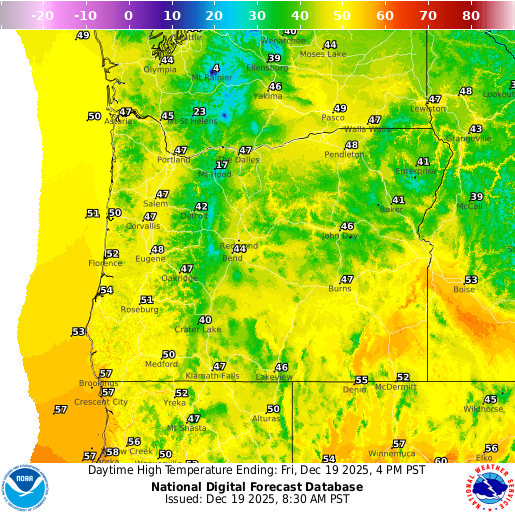
https://graphical.weather.gov/sectors/oregon.php
https://graphical.weather.gov/sectors/oregon.php  Winter is coming! Here’s the overview of our winter outlook, but be sure to check out what we’re predicting in your area: https://www.farmersalmanac.com/extended-forecast

 Turn Around. Don’t Drown.
Flooded roads can be deeper, faster, and more dangerous than they look. Never drive around barricades—they’re there to protect you. Just 12 inches of moving water can sweep away a vehicle, and the road beneath may be washed out.
If you see water on the road:
Stop. Turn around. Choose another route.
Follow posted closures and barricades.
Check conditions before you go.
Your safety—and the safety of first responders—depends on it.

It occurs on December 21st each year and marks the first official day of winter. It also happens to be the shortest day of the year, as well as a unique time when the sun sets and rises in the same part of the sky.

Jackson County Sheriff’s Office Corporal Named Oregon Sheriff’s Deputy of the Year
A Jackson County Sheriff’s Office (JCSO) deputy has been recognized with one of Oregon law enforcement’s highest honors. JCSO Corporal Cynthia Mallari was named the 2025 Oregon State Sheriffs’ Association (OSSA) Deputy of the Year during an awards ceremony held Thursday, December 11, in Bend.

Corporal Mallari exemplifies leadership, dedication, and professionalism in every aspect of her law enforcement career. She embodies the JCSO core values — character, competence, courage, and compassion — and consistently demonstrates an unwavering commitment to her colleagues and the community she serves.
Corporal Mallari has been with JCSO for 13 years. She began her career as a Corrections Deputy in 2012 before transferring to the Patrol Division in 2019. She was promoted to Corporal in 2022 and has continued to distinguish herself as a leader and mentor. In addition to her patrol and supervisory responsibilities, Corporal Mallari serves as a Field Training Officer, Defensive Tactics Instructor, and Crisis Negotiator, bringing extensive expertise and experience to each role.
Known for her positive attitude and strong work ethic, Corporal Mallari approaches every shift with professionalism and enthusiasm. Over the past year, she has worked across three separate patrol shifts, earning the respect and appreciation of every sergeant and deputy she has worked alongside. Her leadership and energy consistently set a high standard and inspire those around her.
As a member of the Crisis Negotiations Team (CNT), Corporal Mallari has proven herself dependable and highly capable. She responded to every CNT callout over the past year, demonstrating composure, sound judgment, and effective communication in high-stress situations. Her ability to listen, assess complex circumstances, and clearly relay critical information up and down the chain of command has made her an invaluable member of the team.
In addition to her regular duties, Corporal Mallari volunteered to assist the Special Victims Unit during a period of overwhelming caseloads. She was one of a select group of deputies asked to take on additional child sex abuse investigations. Despite the demands of patrol work and supervisory responsibilities, she investigated ten child sex abuse and Karly’s Law cases over the past year. She frequently worked on her days off to support victims and their families, attend interviews, locate suspects, and participate in Multidisciplinary Team (MDT) meetings.
Corporal Mallari’s exceptional work ethic, leadership, and problem-solving abilities have made her an indispensable part of the Jackson County Sheriff’s Office. Her contributions this year — and throughout her career — exemplify the highest standards of law enforcement service, making her a deserving recipient of the OSSA Deputy of the Year award.
Holiday Market at the Medford Armory. December 19-21, Fri. 10-7, Sat. 10-6, Sun. 11-4.

Festive fun is in full swing in Medford!

 From luminous lights across the city to model trains with all the bells, horns, and whistles—here’s your bucket list to make the most of the season.
 Medford Garden Railroaders‘ Holiday Train Display
 Selfies with Santa at The Village at Medford Center
 ACCESS‘ Food and Fund Drive at Greystone Court
 What to do in Southern Oregon‘s Holiday Lights Tour Map
 https://www.medfordoregon.gov/…/Medford-Shines-Bright…
Greystone Court in Medford brings in donations of nonperishable food items, as well as cash donations for ACCESS.
December 21, 2025 through December 24, 2025
5:30pm to 9:00pm
Generously sponsored by Evergreen Federal Bank
𝗦𝗵𝗲𝗿𝗺’𝘀 𝗠𝗮𝗿𝗸𝗲𝘁𝘀 𝗔𝗻𝗻𝘂𝗮𝗹 𝗙𝗼𝗼𝗱 𝗳𝗼𝗿 𝗛𝗼𝗽𝗲 𝗖𝗮𝗺𝗽𝗮𝗶𝗴𝗻
From now until December 31st, visit Sherm’s MarketsFood 4 Less or Sherm’s Thunderbird to help feed local families in one of three unique ways:
 Buy a Bag to Feed a family of four
 Round up your purchase to the nearest dollar at the register
 Scan for Hunger with a $1, $3, or $5 at the register
 All proceeds directly benefit our Regional Food Bank and network of 30+ pantries to provide nutritious meals for families during the holidays.
According to Poll of America’s Most Charming Christmas Towns of 2025 List Jacksonville and Ashland
Two Southern Oregon towns are getting national attention this holiday season after being ranked among the most “Hallmark ready” communities in America, according to a national travel survey by Exoticca.
Jacksonville earned the top spot in Oregon, with Ashland close behind. Both were recognized for their historic charm, holiday traditions, and small town atmosphere that voters said felt “straight out of a movie.”
For more information on Jacksonville’s Victorian Christmas, click here.
In Ashland, the long running Festival of Light transforms the city each November with more than a million lights, carriage rides, and downtown events that continue through New Year’s.
Dana Preston with the Ashland Chamber of Commerce said, “People want to stroll downtown, have a cup of coffee, go shopping underneath the lights. They want to feel that magic and Ashland really gives them that experience.”
For more information on Ashland’s Christmas festivities, click here.
Chambers in both cities say the recognition highlights months of planning each year, including holiday event schedules and lighting installations that begin well before Thanksgiving.
Both towns report strong visitor turnout early this season and expect steady tourism through Christmas.
The City Of Talent Temporarily Shutting Off Its Flock Cameras.
There are law enforcement agencies nationwide that use automatic license plate readers from Flock, a safety technology company. Snapshots from these smart cameras can be used as a public safety tool to help track cars involved in crimes or in the event of an Amber Alert.
But the technology is controversial. Many are raising privacy concerns about how the camera data is stored and shared. Eugene and Springfield have recently cancelled Flock Camera after serious consideration.
U.S Senator Ron Wyden (D- OR) said Flock deceived state and local law enforcement customers about its sharing of their data with the Department of Homeland Security and other federal agencies to crack down on immigration.
The city of Talent was granted funding to use the technology more than a year ago. Talent Mayor Darby Ayers-Flood said, “While this technology has already been helpful in supporting investigations in Talent, it has also become controversial nationwide due to concerns about data retention, alleged misuse of information sharing, and the potential for surveillance to extend beyond its original intent.”
Talent Police Chief Jennifer Snook decided to turn off the Flock surveillance cameras until these concerns can be addressed and until more information is gathered about how the technology can be used to support public safety.
The city will not use Flock technology until after the 2026 Oregon legislative session concludes. Ayers-Flood said Talent supports law enforcement and wants to ensure police are equipped with the tools they need. She said this will be an ongoing, open discussion with Talent residents about how the city can support their rights to privacy.
US Marshals Track Down, Arrest Local Child Exploitation Task Force Suspect
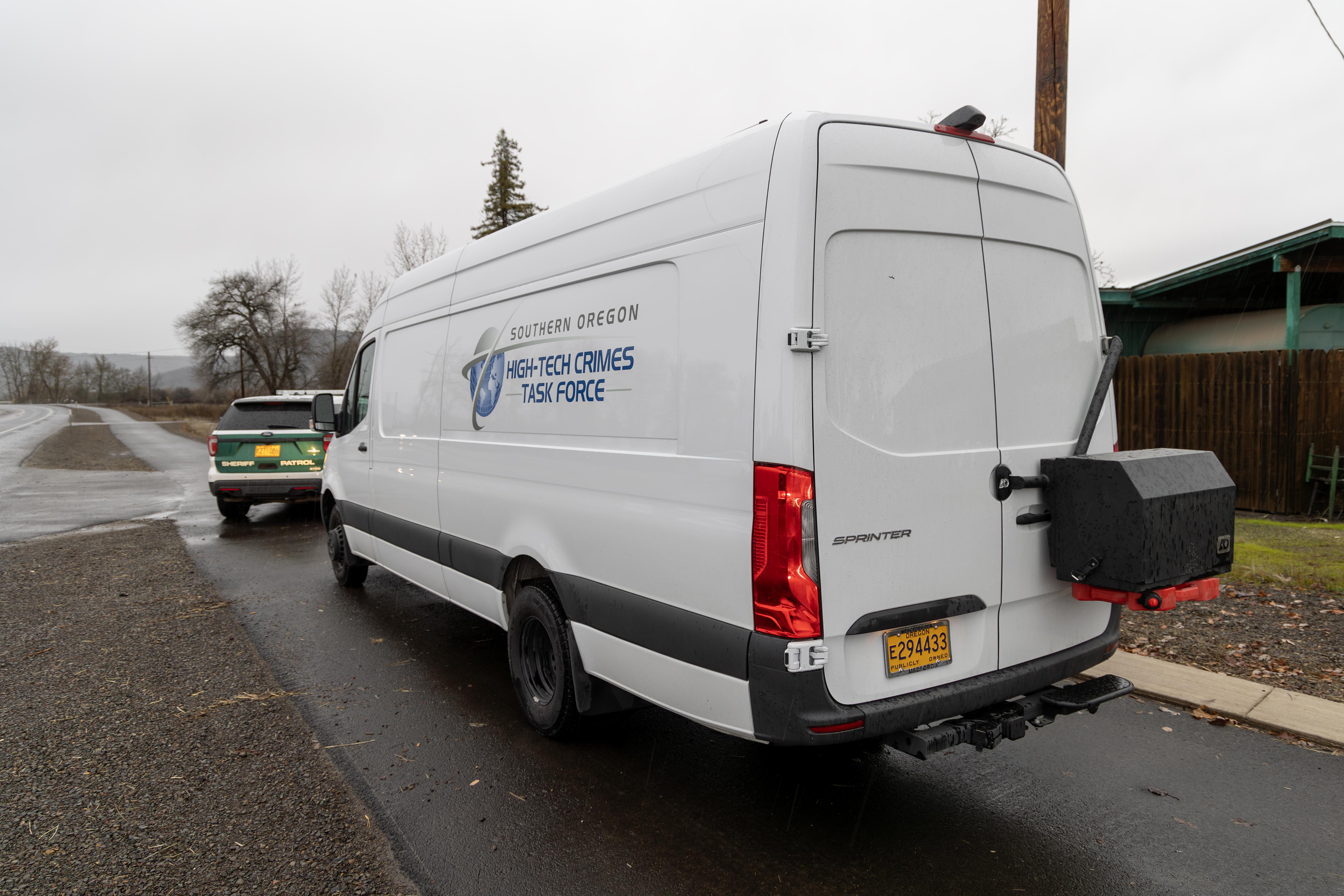
JCSO Case 23-4725
ALTURAS, Calif. – The United States Marshals Service led Pacific Northwest Violent Offender Task Force (PNVOTF) tracked down and arrested a wanted Central Point man hiding out in Alturas, California on November 25. The suspect had a felony warrant following a Southern Oregon Child Exploitation Team (SOCET) investigation into possession of Child Sexual Abuse Material (CSAM).
U.S. Marshals arrested Larry Lynn James Sr., 64, of Central Point, Ore., for six counts of first-degree encouraging child sexual abuse, and four counts of second-degree encouraging child sexual abuse. James is lodged in the Jackson County Jail.
Investigations led the task force from Central Point to Klamath Falls, and finally to rural Alturas, Calif. U.S. Marshals spotted James’ vehicle and conducted a traffic stop where he was arrested without incident. Modoc County Sheriff’s Office assisted.
The arrest originated from a search warrant SOCET served December 7, 2023, at a residence in the 6500 block of Blackwell Road in rural Central Point. SOCET served the warrant after discovering numerous CSAM images were uploaded from the residence. SOCET was assisted by Jackson County Sheriff’s Office (JCSO) deputies and detectives, and Southern Oregon High Tech Crimes Task Force (SOHTCTF) investigators.
During the warrant, investigators seized digital devices which were forensically examined by SOHTCTF for further evidence of child exploitation. A tip from the National Center for Missing and Exploited Children started the investigation, which led to subpoenas, followed by the search warrant at the residence, and the U.S. Marshals arrest.
PNVOTF includes personnel from the U.S. Marshals, JCSO, and Central Point Police Department. The task force specializes in locating and arresting fugitives wanted for offenses including, but not limited to, murder, assault, sex crimes, failure to register as a sex offender, firearm violations, and probation violations.
SOCET is a joint inter-agency task force that started in June of 2020 to combat child exploitation. The task force consists of investigators from JCSO, Medford Police Department, Oregon Department of Justice Internet Crimes Against Children Task Force, and Homeland Security Investigations (HSI), as well as prosecutors from our local, state and federal law enforcement partners in Jackson and Josephine County. SOHTCTF is a joint inter-agency task force that consists of investigators from JCSO, HSI, and MPD. There is no further information available for release.
– Oregon Parks and Recreation Department (OPRD) is hosting two free guided First Day Hikes in the area on New Year’s Day, Thursday, Jan. 1.
It’s part of the annual First Day Hikes event at 25 Oregon State Parks held in partnership with America’s State Parks on New Year’s Day.
Information about the hike hosted at TouVelle State Recreation Site:
- The 1-mile round-trip hike provides beautiful views of the river, the surrounding landscape, and the local flora and fauna. During our hike, we’ll discuss what makes winter a special time to visit our state parks.
- The hike starts at 9 a.m. Meet at day-use area F, 8601 Table Rock Rd, White City, OR 97503.
- The trail is not fully paved, mostly dirt and compacted gravel. The terrain is mostly flat with some gradual slopes.
- Dogs are welcome on six-foot leashes. Children must be accompanied by an adult.
- Participants should dress in layers, wear sturdy shoes, and bring water and snacks, as well as a camera or binoculars for wildlife viewing.
- For more information, 541-601-6407.
Information about the hike hosted at Valley of the Rogue State Park:
- Join us on a 1.5-mile, round-trip hike on the Greenway Trail and Rivers Edge Trail.
- The hike starts at 1 p.m. and begins at the amphitheater parking lot. I-5 Exit 45B, Gold Hill, OR 97525.
- The trail has both paved and dirt areas. The terrain is mostly flat with some gradual slopes.
- Dogs are welcome on six-foot leashes. Children must be accompanied by an adult.
- Participants should dress in layers, wear sturdy shoes, and bring water and snacks, as well as a camera or binoculars for wildlife viewing.
- For more information, 541-601-6407.
If you have questions about access or to request any reasonable accommodations needed for your participation in these hikes, please contact Park Ranger Kody Kirby, 541-601-6407. Requests must be submitted at least three days prior to January 1.
All activities are free, but a day-use parking permit is required. Permits cost $10 per day for Oregon Residents or $12 for non-residents; annual permits are also sold at the park.
Share photos of First Day Hikes via social media by using the hashtag #ORfirstdayhikes.
First Day Hikes is a national initiative to welcome the coming year in the outdoors, promote exercise and encourage connecting with nature. The Oregon Parks and Recreation Department has participated since 2012.
Wrong Way Driver Mitigation Construction Project in Southern Oregon
The Oregon Department of Transportation (ODOT) project hopes to mitigate wrong-way driver incidents along the interstate.
This project hopes to reduce the number of wrong way drivers at I-5 interchanges by evaluating each interchange connection and apply relatively low-cost treatments. These include increased signing and striping. At certain high-risk interchanges, other measures will be considered such as increased illumination, automated warning systems and overhead signing.
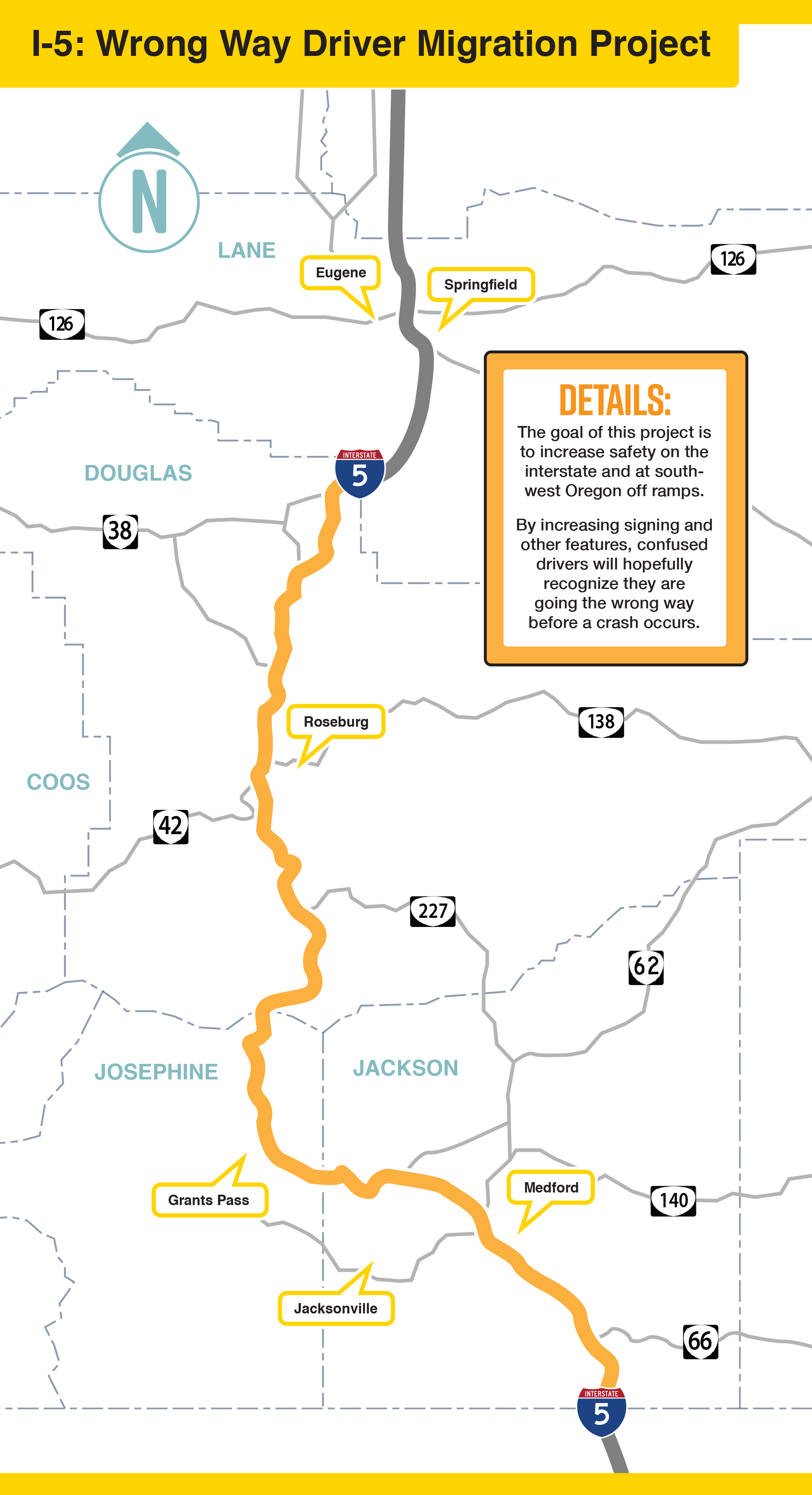

The agency said Southwest Oregon sees a higher percentage of wrong-way driver crashes compared to other areas of the state. Just two weeks ago NBC5 reported a 34-year-old Grants Pass woman died driving the wrong way on the interstate. ODOT said these incidents can result in serious injuries or fatalities and many involve impaired drivers.
The project began earlier in June, spanning from the California border to Northern Douglas County. It adds features like permanent signs, reflective pavement markings, flashing beacons at interchanges and more. ODOT’s Julie Denney said, “The work on this project is happening at night so you might see some exit closures, you might see some workers on the side of the road and if that happens, please give them space, slow down and watch your speed.”
ODOT said given the scope of the project, the work could continue till next fall. More information can be found here: https://www.oregon.gov/odot/projects/pages/project-details.aspx?project=21699
Local Residents Invited to Share Input on BLM Forest Health Project in Applegate and Lake Creek Areas
The Bureau of Land Management (BLM) Ashland Field Office in Medford, Oregon, is seeking public input on a new forest health and timber harvest project. The project will focus on the Applegate and Lake Creek areas. It aims to address Douglas-fir tree deaths by reducing fire risks through salvage harvests and thinning.
Lauren Brown, the Ashland Field Office Manager, said that removing dead and dying trees can help improve forest health and slow the spread of fire. The project is part of the Douglas-fir Mortality Complex Environmental Assessment. Its goal is to make forests more resilient to fire, drought, and insects.
A 37-day public scoping period will start on December 8, 2025. Community members can provide feedback and follow updates on the BLM NEPA Register. The BLM manages 245 million acres of public land in 12 western states, including Alaska. Visit here for more details
Asante is preparing to convert the local Ashland Community Hospital into a satellite campus of Rogue Regional Medical Center, to ensure continued access to services despite financial difficulties in the community.
By the spring of 2026, the hospital will operate as an extension of Rogue Regional, which is located in Medford. Ashland Community Hospital will retain its 24/7 Emergency Department and critical outpatient services, such as surgery, lab, and imaging, at its existing Maple Street site. However, the hospital will discontinue its inpatient and obstetrics services.
Asante reported that Ashland Community Hospital experienced a rise in emergency and outpatient visits over the past year, yet recorded only 37 births from Ashland residents in 2025.
Oregon legislation has placed hospitals in a challenging position, making this transition the only viable option for the hospital to continue offering essential healthcare services.
Three individuals have been referred to the Jackson County District Attorney’s Office for possible charges related to the pursuit or harassment of wildlife following a tumultuous incident on Black Friday involving a black bear.
Oregon State Police troopers responded to the 4900 block of Sams Valley Road on the morning of November 28 after receiving reports of an animal bite. According to the OSP, the incident commenced when a group of individuals halted their vehicles to photograph and approach a small bear, ultimately cornering the animal against a fence.
The situation intensified when a woman attempted to feed the bear a dog treat, prompting the agitated animal to charge and bite her. The woman was subsequently transported to Rogue Regional Medical Center with a serious bite injury.
Another bystander was also charged by the animal, which was shot and killed. The Oregon Department of Fish and Wildlife (ODFW) confirmed that the bear was a 76-pound female, estimated to be around 1.5 years old.
Troopers collected the bear as evidence, and ODFW is currently conducting tests on the animal for rabies, with results anticipated this week.
 Josephine County Toys for Tots Needs Your Help!
 Rogue Valley Young Marines in Action!


https://www.facebook.com/JosephineCountyToysforTots
https://josephinecounty.toysfortots.org
Our Foster Kids, Inc Angel Tree is still up in The Josephine County Sheriff’s lobby

December is bursting with creativity at the Children’s Museum!
 New December Highlights Include:
 Ice Painting – Create dazzling winter art using colorful ice cubes
 Snowball Target Practice – Indoor fun without the cold
 Yeti Sledding – All the thrill, no snow required
 Winter Village Creation – Design your own miniature winter wonderland
 3-D Drawing Ornaments – Make custom holiday keepsakes
 Seasonal Crafts at the Tinker Bar – Drop-in creativity all month long
 Open Tuesday–Saturday | Programming included with admission Perfect for cozy winter days, holiday breaks, and memory-making with the whole family. Check out the full December schedule and plan your visit today! www.tcmso.org
CSO Case 24-4928 PROSPECT, Ore. – Jackson County Sheriff’s Office (JCSO) detectives and Search and Rescue (SAR) personnel continue to search for a woman missing out of Prospect, Ore. since September 2024.
Deenah Padgett, 69, was reported missing on Sunday, September 8, 2024. She was last seen camping in the Prospect area on September 4, 2024. She is described as a white woman with brownish-red, partially gray hair, standing 4’8” tall and weighing 90-100 lbs. JCSO detectives and SAR personnel have searched the area extensively and are looking for the public’s help. If you see Deenah or know her whereabouts, immediately call ECSO Dispatch at (541) 776-7206 and reference case 24-4928. If you have any information that might help the investigation, call Detective Friend at (541) 864-8774.
The Jackson County Sheriff’s Office (JCSO) is asking for help identifying the owner a motorhome. It could be associated with a missing person from the Prospect area. JCSO says 68-year-old Deenah Padgett has been missing since August 30 from Prospect, described as a white woman, 4’ 8” tall, weighing approximately 95 pounds with brownish red/greying hair. JCSO issued an advisory this weekend asking anyone with information about the owner of the pictured motor home or Padgett’s whereabouts to call Emergency Communications of Southern Oregon (ECSO) dispatch non-emergency phone number at 541-776-7206.
Rogue Valley Humane Society
Please help! We are in need of large towels to help keep our animals clean and happy. Donations would be greatly appreciated and helpful. Please drop them off during business hours, Monday-Saturday, noon – 4 pm. Thank you so much for all you do to help us do what we do!
Sharing for our friends at Salvation Army:
Help Fill Our Food Pantry – Your Donations Make a Difference! Hunger is a reality for many in our community, but together, we can make a change! Our food pantry is in need of non-perishable food items to help families struggling to put meals on the table. Most Needed Items: Canned vegetables & fruits Rice & pasta Peanut butter & jelly Cereal & oatmeal Soup & canned proteins (tuna, chicken, beans) Drop-off Location: 922 N. Central Avenue Medford, OR 97501 Hours: 9am-3pm Monday, Tuesday, Thursday, Friday Every can, box, and bag of food makes a difference in someone’s life. Let’s come together to fight hunger—because no one should go to bed hungry. .
Ashland Rolls Out Free Pre-Approved Plans to Spur Residents into Building Affordable Backyard Homes
Seeking to promote affordability and support residents’ diverse needs, the city of Ashland has encouraged its citizens to develop accessory dwelling units (ADUs) within the city and offers guidance on getting plans approved.
The City of Ashland has streamlined the ADU application process to enhance housing options. It now offers a complete set of pre-approved ADU plans that meet local building codes for free to Ashland property owners.
To get ADU plan approval in Ashland, the Ashland Planning Division offers a free consultation. At the meeting, a City Planner will review your site and provide valuable guidance on the permit application process. The meeting is geared towards helping you understand zoning requirements, building codes, and any other considerations for ADU projects. Find free City of Ashland ADU plans here
Rogue Valley Humane Society
Our Community Food Bank exists to help folks who need an extra helping hand during a difficult month to feed their pets. Our program has a limited budget and so we rely on generous members of our community to donate some of these goods to continue to help assist our community. In 2023 we fed an average of 700 pets a month! This equates to approximately 70 – 40lb bags of food each month! Many pets have benefited from the community’s generosity, and we can’t thank you enough for your kindness.
David Grubbs’ Murder Investigation Remains Active
The Ashland Police Department’s investigation into the murder of David Grubbs on November 19, 2011 remains open and active. Recently two new detectives have been assigned to look into new leads that have come in. This case remains important to David’s family, the community, and the Ashland Police Department. As detectives continue to pursue these new leads, anyone with additional information is encouraged to reach out to the Ashland Police Department at 541-488-2211. The reward for information leading to an arrest on this case remains at over $21,000.
Fauna Frey Vanished Without A Trace In Josephine County
 It’s been five years since the disappearance of a Lane County Woman, who was last seen in Grants Pass. Back in June of 2020, Fauna Frey disappeared. Police said the 45-year-old left her home in Dexter to drive to Grants Pass to visit her brother’s friend after her brother had recently passed away. The last place she was seen was at the Big 5 in Grants Pass. Investigators said her car was found in the Galice area months later. The circumstances of Fauna’s disappearance remain unclear and her case is currently classified as missing. Her case remains unsolved. Fauna’s disappearance has been featured on multiple investigative podcasts, including Nowhere to be Found, Here One Minute, Gone the Next, and Detective Perspective, each trying to fill the silence left by law enforcement. New listeners continue to discover her story, hoping a fresh set of eyes or a single loose memory might be the key to finding Fauna.
Have Information on Fauna Frey? Please Speak Up!
If you know anything, no matter how small, please contact:
- Josephine County Sheriff’s Office
- Tip line: (541) 359-5638
- Email: FindFaunaFrey@gmail.com
Currrently there is a $50,000 CASH REWARD for information leading to the location of Fauna Frey. LARGE CASH REWARDS are being offered for any other relevant information, such as any objects that could be identified as Fauna’s, i.e. her wallet, keys, or Indian/Buffalo .999 silver bullion coins. Find Fauna Frey Facebook Group: https://www.facebook.com/groups/341658526970132
Oregon Food Bank
Programs like SNAP, which help 1 in 8 Oregonians put food on the table, are facing deep cuts — leaving more families, children, veterans, and elders to make impossible choices between food, safety, and shelter. We need policies that protect access to food for all our neighbors. Because no one should have to choose between staying safe and going hungry. Food is available for those who need it and by entering your zip code at OregonFoodFinder.or -You can see each local program’s contact information, hours of operation and what kind of distribution it is. We partner with 1,200+ free food markets, pantries and meal sites all across Oregon and Southwest Washington — and welcome anyone and everyone who needs food. OregonFoodFinder.org
Oregon Food Bank · Find free food sites near you using OregonFoodFinder.org.
You can find food in your community at this link
Our network of food banks and pantries provides free food and groceries across Oregon. No proof of income or documentation required.
https://www.oregonfoodbank.org/
If you can’t make it to a food location, someone else can pick up food for you.You will just need to print and fill out the Authorized Representative form at https://lnkd.in/dsskUpkQ, and have them take it with them to the food sites. You can find step-by-step instructions at https://lnkd.in/dVBRxn-A.

The United States Postal Service official mailing deadlines for the 2025 holiday season

For those sending items within the contiguous 48 states, the following send-by dates are recommended:
December 17 for USPS Ground Advantage and First-Class Mail (which includes holiday cards and small packages) December 18 for Priority Mail
December 20 for Priority Mail Express, the quickest domestic shipping option offered by USPS.
USPS advises customers to ship early, use trackable services, and consider acquiring insurance for valuable items. Flat-rate boxes and shipping supplies can be obtained at local post offices and online at usps.com, where a comprehensive list of holiday deadlines, including those for international and military shipping, is also available.
Oregon grows more Christmas trees than other states. Climate researchers want to keep it that way

As Oregonians prepare for Christmas, researchers are looking into how they can keep the state’s Christmas tree industry alive for decades to come.
Oregon grows more Christmas trees than any other state in the country, selling 3 million trees in 2023 and contributing $118 million to the state’s economy, according to the most recent federal data available. More than half of those trees are sold in California, with other Western states, Mexico, Canada, Hong Kong, Japan, Panama, Singapore and Maldives among Oregon growers’ top markets, according to the Oregon Department of Agriculture.
The state’s mild summers and wet winters are ideal for growing popular Christmas tree species like the native noble and Douglas firs, but researchers are looking beyond native species to find trees that can withstand hotter and drier conditions.
Priya Rajarapu, an assistant professor and Christmas tree specialist at Oregon State University, works closely with growers and spends much of her time diagnosing sick trees.
“The two most significant problems that we have right now with climate change is one, keeping the seedlings alive after they are transplanted in the field the first year, and two, the older trees are more stressed because there is not enough water, which makes them prone to pests and disease attacks more frequently,” she told the Capital Chronicle.
Rajarapu is researching how species from Eurasia are growing in Oregon — a project that started under her predecessor, Chal Landgren, who collected Nordmann fir and Turkish fir seeds from Georgia and Turkey. Those trees are now growing at a 3-acre site she oversees in Aurora. So far, Rajarapu has found that they are more tolerant to drought and pests, which reduces the need for chemical insecticides.
The species are a growing percentage of Oregon’s crop, and the research supports a vital part of Oregon’s economy that supports seasonal jobs in rural areas, Rajarapu said.
“When you buy a real tree, you’re supporting a local Oregon business, and you should take pride in it, because we are the leading producers of the trees in the country,” Rajarapu said. (SOURCE)
BLM “One Dollar, One Tree” Holiday Savings Across Local Public Lands
New fee reductions and expanded cutting areas offer meaningful savings for families this winter
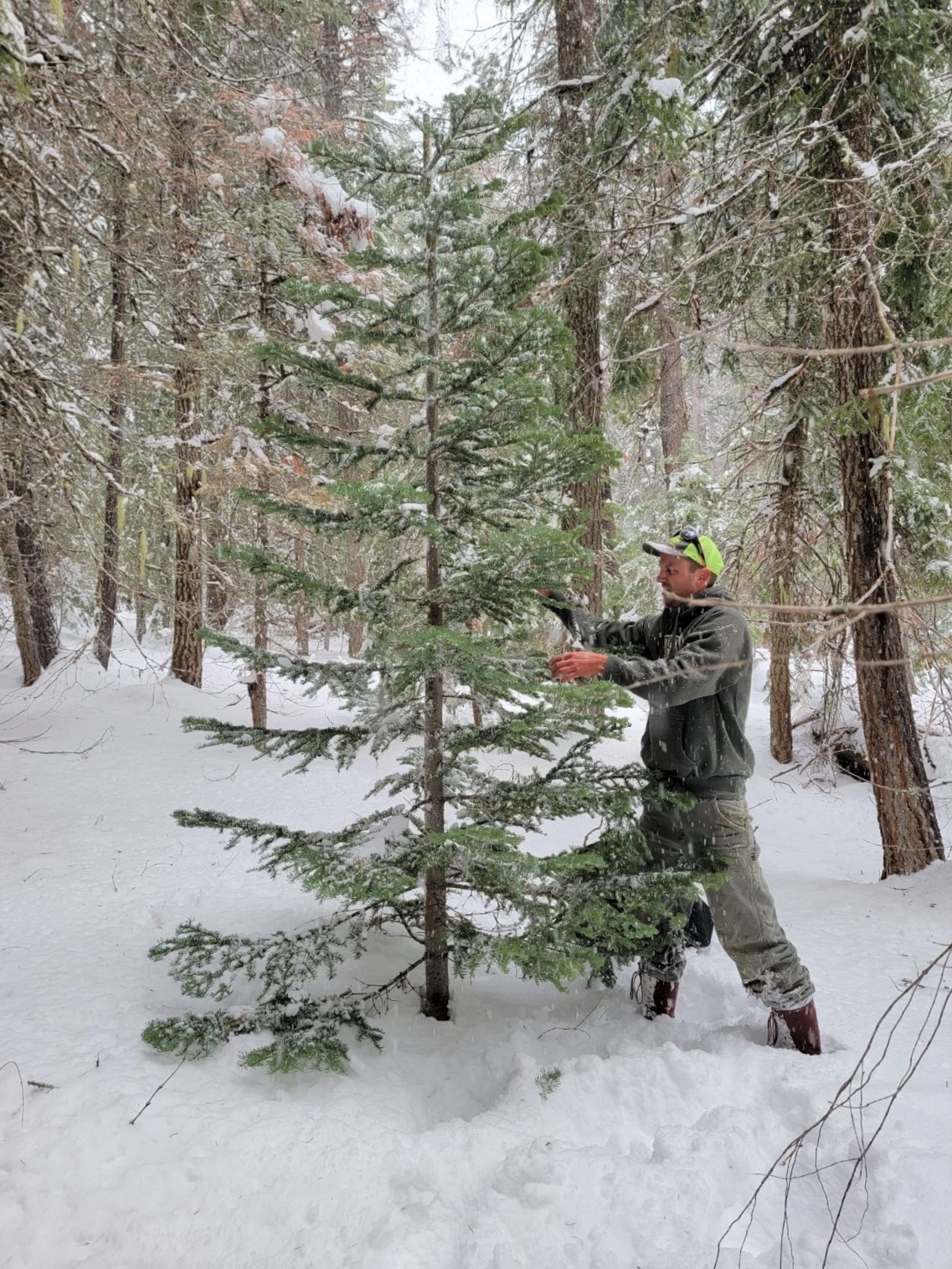
The Bureau of Land Management has announced a series of holiday affordability measures that will help families save money, enjoy public lands, and support wildfire prevention efforts across Oregon and Washington during the 2025–2026 winter season.
Effective immediately through January 31, the BLM is reducing many personal-use permit fees to just $1, including Christmas tree permits and firewood permits. Local BLM offices are also opening new cutting areas in overstocked woodlands to provide families with more opportunities to gather their own firewood and Christmas trees, while also supporting forest thinning and hazardous fuel reduction.
“Here in Oregon and Washington, families rely on public lands for tradition, recreation, and essential resources,” said Barry Bushue, BLM OR/WA State Director. “These fee reductions and expanded access make it easier for people to gather firewood and Christmas trees close to home, all while helping us reduce hazardous fuels and improve forest health.”
These actions align with the Trump administration’s mission to lower costs for American families and will contribute to national savings estimated at more than $9.4 million this holiday season.
Effective immediately, the BLM will:
- Reduce fees for personal-use Christmas tree and firewood permits.
- Increase household limits to up to 10 cords of firewood and up to three Christmas trees, with flexibility to adjust limits in areas with abundant resources.
These steps will help reduce household costs, expand access to local woodlands, and improve forest conditions by removing overstocked or hazardous fuels. The BLM will continue coordinating with community partners, tribal governments and local organizations to share information about permit availability and new cutting areas.
Residents can find up-to-date information on permit locations, cutting area maps, and safety guidance at: https://www.blm.gov/programs/natural-resources/forests-and-woodlands/forest-product-permits/oregon-christmas-trees
-BLM- The BLM manages roughly 245 million acres of public land located primarily in 12 western states, including Alaska, on behalf of the American people. The BLM also administers 700 million acres of sub-surface mineral estate throughout the nation. Our mission is to sustain the health, diversity, and productivity of America’s public lands for the use and enjoyment of present and future generations.
Oregon Jobs Projected to Increase 6% by 2034
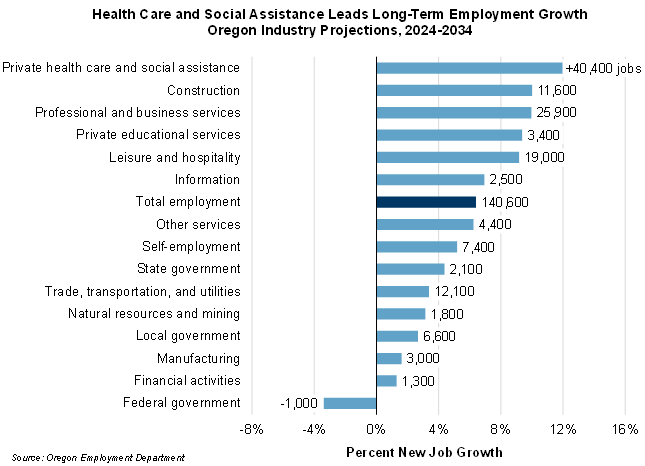
The Oregon Employment Department projects Oregon’s total employment to grow by 141,000 jobs between 2024 and 2034. These employment projections reflect modest job growth in the economy, although many additional job openings are expected due to the need to replace workers who leave their occupations.
In 2024, there were 2.2 million jobs in Oregon. The projected 6% increase in employment between 2024 and 2034 includes private-sector gains of 125,500 jobs, growth of 7,700 jobs in government, and an additional 7,400 self-employed Oregonians.
Beyond gains associated with the anticipated economic growth, another 2.4 million job openings will be created by 2034 to replace workers who retire, leave the labor force for other reasons, or make a major occupational change. Together, the number of job openings due to job growth and replacements will total nearly 2.6 million.
All broad sectors in Oregon are expected to add jobs by 2034, except for federal government, which is projected to decline by 3% (-1,000 jobs). The private health care and social assistance sector is projected to increase the fastest, growing by 13%. Private health care and social assistance is also projected to add the largest number of jobs over the next 10 years (+40,400 jobs). This growth is attributed to the aging of the state’s population, longer life expectancies, and an expected rebound in the state’s long-term population growth.
The construction and professional and business services sectors are projected to grow at the second-fastest rate, gaining 10% each. Growth in construction can be attributed to construction of buildings (+11%) and specialty trade contractors (+11%), which includes establishments that perform specific construction-related activities such as site preparation, plumbing, painting, and electrical work.
Growth in professional and business services is expected to be primarily driven by professional and technical services (+15%), which includes architectural and engineering services (+23%), computer systems design and related services (+10%), and legal services (-3%).
Many of the fastest-growing occupations are associated with jobs in the health care industry. Nine of the top 15 fastest-growing occupations by 2034 are in health care. They include nurse practitioners, physician assistants, medical and health services managers, and psychiatric technicians. Computer and mathematical occupations comprise three of the top 15 fastest-growing occupations, as demand increases for workers who can model, interpret, and analyze data in addition to demand for the development of AI solutions and their integration into business practices. They include data scientists, information security analysts, and operations research analysts.
A broad variety of career opportunities will be available across all sectors, as well as all job types. Four out of 10 job openings will require education or training beyond high school, but applicants will require education beyond high school to be competitive in six out of 10 job openings.
Occupations with the most job openings that typically require a high school diploma or less include fast food workers, stockers and order fillers, retail salespersons, cashiers, and home health and personal care aides. Those requiring a postsecondary certification or associate’s degree include bookkeepers, truck drivers, nursing and medical assistants. Occupations with the most job openings requiring at least a bachelor’s degree vary from general and operations managers to registered nurses, other educational instruction and library workers, project management specialists, and all other business operations specialists.
All areas of Oregon are expected to see job opportunities in the coming years due to economic growth and the replacement of workers leaving the labor force. The two areas projected to grow faster than Oregon’s rate of 6% are the Portland tri-county area (7%) and Central Oregon (7%). Slower growth is expected in the Columbia Gorge, Northwest, South Central, Southwestern Oregon, and the Eastern Six Oregon counties with 5% growth each.
Additional Information
More information on 2024-2034 industry and occupational projections for Oregon and sub-state areas can be found at www.qualityinfo.org/projections.
Oregon Department of Veterans’ Affairs Awards Nearly $1 Million to Local Veteran Service Providers Across the State
The Oregon Department of Veterans’ Affairs (ODVA) is pleased to announce the award of nearly $1 million in grant funding to support a range of robust and innovative local veteran service efforts and key projects to help improve veteran outcomes and provide critical services across Oregon.
The Legislature approved $972,653 for the Veteran Services Grant program for the 2025-27 biennium, which was first established following Oregon voters’ overwhelming support of Measure 96 in 2016 dedicating 1.5 percent of Lottery net proceeds to fund veteran services. ODVA received proposals from across Oregon totaling more than $3.6 million in requested funds. Of these, 16 organizations were selected to receive awards, which range from approximately $10,500 to $145,000 for the one-time grants.
The awards include projects and services focusing on veteran homelessness and housing insecurity, transportation access, education and training, employment opportunities, and other critical services in communities across the state. The grant awards will benefit veterans and their families living in rural, urban and Tribal communities.
The projects were evaluated by a committee composed of members of the Veterans Advisory Committee to the Oregon Department of Veterans’ Affairs, representatives from various veteran service organizations, as well as other provider partners from across the state.
“This grant isn’t just about dollars — it’s about investing in people, communities, and ideas that help veterans build stable, fulfilling lives here in Oregon,” said ODVA Director Dr. Nakeia Council Daniels. “Through the power of these locally driven, community-led solutions, we’re strengthening partnerships and building resilient systems that support the diverse needs of veterans across our state. The work of the Veteran Service Grant Program helps ensure that every Oregon veteran has the opportunity to thrive, no matter where they live.”
The ODVA Veteran Services Grant recipients for the 2025-27 cycle are:
- American Military Encouragement Network (AMEN)
- Confederated Tribes of Grand Ronde
- Confederated Tribes of Siletz Indians
- Fort Kennedy
- Housing Our Veterans
- Lake County Senior Citizens Association
- Linn County Veterans Services
- Oregon Cascades West Council of Governments
- Paws Assisting Veterans
- Reveille and Retreat Project
- Solid Ground Equine Assisted Activities and Therapy Center
- St. Andrew Legal Clinic
- VetREST
- Wallowa Valley Center for Wellness
- Washington County Disability, Aging and Veteran Services
- Wheeler County Community Transportation
To learn more about the Veteran Services Grant or other grant opportunities available through ODVA, visit https://www.oregon.gov/odva/agency-programs/grants/Pages/Veteran-Services-Grant.aspx.
Veterans and families seeking claims and benefits assistance are encouraged to contact their local county or Tribal veteran services office. To find services near you, visit www.oregon.gov/odva/Services/Pages/default.aspx.
Established in 1945, the Oregon Department of Veterans’ Affairs is dedicated to serving Oregon’s diverse veteran community that spans five eras of service members. ODVA administers programs and provides special advocacy and assistance in accessing earned veteran benefits across the state. Learn about veteran benefits and services or locate a local county or Tribal veteran services office online at oregon.gov/odva.
Oregon Department of Forestry and University of Oregon Hazards Lab sign memorandum of understanding to strengthen statewide wildfire hazard monitoring and preparedness
The Oregon Department of Forestry (ODF) and the Oregon Hazards Lab at the University of Oregon (OHAZ) have entered a new Memorandum of Understanding (MOU) that formally establishes a statewide collaboration to improve early detection, monitoring, and response to natural hazards across Oregon.
The agreement aligns operations, research, and practices between the two organizations, supporting shared goals of reducing risk, protecting communities, and building a more resilient future for the state. The agreement also represents a direct outcome of the Oregon Wildfire Detection Camera Interoperability Committee that serves Oregon by coordinating a broad consortium of fire agencies, first responders, utility companies, and technology operators.
Under the MOU, ODF and OHAZ will coordinate efforts on legislative strategy and funding pursuits, expand access to emerging tools and scientific expertise, and develop collaborative pilot projects. The partnership emphasizes interoperability, training, exchange of data and best practices.
“This collaboration advances Oregon’s ability to respond to wildfire, seismic threats, floods, and other natural hazards with the best tools and information available,” said Leland O’Driscoll, the Director of OHAZ. “By partnering with ODF, we can strengthen statewide systems that protect lives, property, and natural resources.”
The partnership reflects a broader vision: that clear, coordinated arrangements among Oregon’s public agencies and research institutions enhance transparency, accountability, and reliability during critical events. By integrating scientific innovation with on-the-ground operational expertise, ODF and OHAZ aim to improve hazard monitoring and early detection statewide.
“Oregonians benefit when universities, government agencies, and public partners work from a shared understanding and aligned goals,” said Michael Curran, ODF Fire Protection Division Chief. “This agreement enables meaningful collaboration—from research to real-time operations—to help communities prepare for and respond to hazards more effectively.”
As Oregon continues to face increasing risks from wildfire, extreme weather, and geological hazards, this collaboration will help advance proactive strategies and better equip the state with timely, actionable information.
Oregon Department of Emergency Management Launches New OEM Grants Platform to Streamline Disaster Recovery Funding
The Oregon Department of Emergency Management (OEM) is launching the OEM Grants platform on December 16, 2025. This new, statewide system is designed to simplify how organizations approved for grants manage and track Federal Emergency Management Agency (FEMA) Public Assistance (PA) funding after disasters. The platform will improve efficiency, transparency and accountability in Oregon’s long-term recovery efforts.
Under the new process, subapplicants will continue to use FEMA’s Public Assistance Grants Portal (GP) to apply for funding, upload required documentation for project development, and work through eligibility and requirements with FEMA. Once FEMA approves a project, management will transition to the OEM Grants platform.
Within the new system, grant recipients will be able to:
- Manage projects from grant award through closeout
- Submit and track reimbursement requests
- Track and report grant finances
- Communicate and collaborate directly with OEM staff
“Oregon communities depend on timely and transparent access to disaster recovery funding, and this new platform helps ensure we can meet that responsibility,” Erin McMahon, Director of the Oregon Department of Emergency Management, said. “By modernizing how we manage Public Assistance grants, we are strengthening our partnerships with certain nonprofits, as well as local and Tribal governments. We are also improving how we support communities throughout their recovery.”
Washington and Oregon left waiting for new cost estimate to replace I-5 bridge
Planners say they need the Coast Guard to green light a design, a decision expected in the spring. Construction isn’t getting any cheaper.

A group of Washington and Oregon lawmakers gathered Monday, expecting to hear a new estimate of the cost to replace the Interstate 5 bridge across the Columbia River.
When it didn’t come, some on the bi-state and bipartisan committee assigned to keep tabs on the megaproject rebuked planners responsible for delivering the updated figures. Lawmakers are wrestling with budget challenges in both states, they said, and escalating costs might need addressing in their respective 2026 sessions.
“I want a date, and I want a report, or else I would say that your team is not doing its work,” said Oregon state Rep. Thủy Trần, D-Portland. “You can’t punt it down the road without giving us something.”
Washington state Rep. John Ley, R-Vancouver, said he was “extremely disappointed” because if costs are rising, the two states may be asked to give additional money. Lawmakers need time to explore ways to trim the project to something “closer to our taxpayers ability to pay,” he said.
Project planners acknowledged they didn’t deliver. They said they are waiting to learn if the U.S. Coast Guard will allow the design of the new bridge to be the fixed span desired by the two states or require a movable span like the existing bridge.
A movable span will add more than a half-billion dollars to the project’s price tag.
That decision is critical to an “accurate and comprehensive cost estimate,” said Carley Francis, southwest regional administrator for the Washington State Department of Transportation and the incoming interim director of the Interstate Bridge Replacement Program.
There’s no sign the trend will reverse. It’s why lawmakers in September said they anticipated the next cost estimate will exceed $8 billion and could reach $10 billion.
While Francis detailed the process for calculating an estimate, she veered away from positing any numbers Monday. She made clear multiple times it won’t be done until they know what kind of bridge it will be.
“I do not have a specific time frame for you today because the Coast Guard decision is so material,” she said.
‘Tremendously tough project’ – 2026 is shaping as a year of critical decisions for the project.
First up, is the U.S. Coast Guard’s determination.
Three years ago, the federal entity embraced a movable span but gave the two states time to put forth an argument for a fixed span. Last month, project planners submitted a report responding to the Coast Guard’s arguments that included agreements to offset impacts to those businesses that cannot travel under a fixed span.
Also early next year, the Federal Highway Administration and Federal Transit Administration are expected to publish the final supplemental environmental impact statement for the project. But it cannot be finished until the bridge configuration is known.
Once the bridge design is set, staff said they can update the cost estimate and complete a separate plan showing how the multi-year undertaking will be financed.
That financial plan is due to the federal government by the end of next September and is needed to unlock a $1.5 billion capital investment grant secured last year. Missing the deadline puts those dollars at risk, although program staff said they’d seek an extension if they are waiting on a bridge design decision and environmental report.
If required approvals are in hand in 2026, as planners anticipate, cars could begin driving across a new bridge in 2032 or 2033.
It’s a “tremendously tough project,” said outgoing program administrator Greg Johnson.
“The biggest hedge we have against escalation and inflation is getting started, getting shovels in the ground,” he added.
Questions abound – Lawmakers weren’t alone in their pique at the lack of new projected price tag.
“Tragically today you have failed to get the most important information about this project: How much it will cost,” said Joe Cortright, director of City Observatory in Portland, a think tank focusing on urban economic issues. “They really know the cost estimate will be much higher but they are not sharing it with you.”
Chris Smith of Just Crossing Alliance, which advocates for light rail and transit on the future bridge, said the delay in producing numbers is part of a “nakedly political process to avoid delivering bad news.”
Laurie Layne of Buckley, a small town in Washington’s Pierce County, urged lawmakers to remember that many residents of the two states cannot afford to pay more.
“A lot of us taxpayers are on hamburger helper budgets,” she said.
Cost estimate and bridge design were not the only outstanding matters flagged Monday.
Oregon Rep. Shelly Boshart Davis, R-Albany, said it’s problematic that administrators know how bicyclists and pedestrians will be served but haven’t decided on how many auxiliary lanes there will be on the bridge, calling it a top concern for the freight industry.
Johnson said a decision on whether the bridge will include one or two auxiliary lanes in each direction will be made next year in the final supplemental environmental impact statement. (SOURCE)
Opponents of Oregon’s newly established transportation funding package submitted nearly 200,000 signatures to the Secretary of State’s Office on Friday, an action that immediately halts the forthcoming tax and fee increases pending verification of the signatures.
The initiative, spearheaded by the “No Tax Oregon” campaign, seeks to place a repeal referendum on the ballot for November 2026 after watching Gov. Tina Kotek keep piling on new taxes to Oregonians. Petitioners require just over 78,000 valid signatures to qualify.
The organization claims it exceeded that requirement within days and has continued to gather signatures statewide. The transportation package, which was approved by lawmakers earlier this year, encompasses a six-cent increase in the gas tax, elevated DMV fees even more, and a doubling of the state’s transit payroll tax.
Proponents assert that the revenue is essential for maintaining roads and sustaining transit services. Opponents argue that the additional costs—estimated to be around $600 annually for some families—would exacerbate affordability challenges throughout the state, and they assert that the pause prevents ODOT from generating new revenue until voters have the opportunity to express their opinions.
Oregon ranks fourth in GoFundMe’s 2025 year of help report
New data from GoFundMe’s 2025 Year in Help report highlights Oregon as the fourth most generous state in the country, reflecting a year in which people across the state stepped up for their neighbors in moments of crisis.

“I wanna believe that this is really a function of how human beings at their best are meant to interact,” said Margaret Richardson, GoFundMe’s chief corporate affairs and marketing officer.
The report points to a wave of support shared among Oregonians throughout the year. Richardson said stories of need circulating across communities played a key role in inspiring people to give.
“The stories that are breaking through and reaching Oregonians are inspiring them to unlock their generosity,” she said. “That storytelling that happens with human dignity really powers people to feel like ‘I can do something about this.’”
One of the strongest data points in the report was the number of donations directed to the 2025 Wildfire Relief Fund. More than 1,000 Oregonians contributed, a result Richardson said is tied to the shared experience many residents have with wildfire threats.
“Many Oregonians themselves have faced the imminent challenge of being displaced or being evacuated or staying inside because of wildfires,” she said. “That empathy of having been through it contributes to the extraordinary generosity that we see.”
GoFundMe’s report notes that moments of hardship helped bring communities together, with Oregonians repeatedly responding to ensure their neighbors did not face those challenges alone. SEE MORE: https://www.gofundme.com/c/gofundme-2025-year-in-help
Oregon reduces barriers to birth control for Medicaid members
Oregon Health Plan members will be able to obtain birth control and emergency contraception without a prescription and at no cost starting Dec. 16
Starting Tuesday, Oregon Health Plan (OHP / Medicaid) members will be able to get over-the-counter birth control pills, including Opill, and emergency contraception at no cost at pharmacies in the state. Oregon Health Authority (OHA), in collaboration with the Oregon Board of Pharmacy, made this possible through a standing order, which allows pharmacists to provide these medications to OHP members and bill OHP.
“Access to reproductive health care should not depend on how much money you make or what kind of insurance you have,” Governor Tina Kotek said. “This step ensures that Oregon Health Plan families can get timely, affordable birth control. I will keep working to make sure every Oregonian can access the care they need to make the decisions that are right for them.”
In Oregon, these medications are already covered without a prescription for people with private insurance. Federal law, however, requires that all medications for Medicaid enrollees be prescribed by a licensed practitioner who is enrolled in the state’s Medicaid program. Oregon’s new standing order means that OHP members will no longer have to get a prescription to access these contraceptives at no cost.
“This change removes a real and unnecessary barrier to care,” said OHA Director, Dr. Sejal Hathi. “By allowing Oregon Health Plan members to get safe, effective contraception directly from pharmacies – without a prescription and at no cost to themselves – we are closing a longstanding gap between private insurance and Medicaid and ensuring all people in Oregon have greater control over their own reproductive health.”
Over-the-counter emergency contraception has been widely available for several years, and the FDA approved Opill as the first birth control pill for over-the-counter use in 2023. Previously, however, OHP members were required to pay out of pocket or else seek out a doctor’s appointment for a prescription to get these medicines covered.
Oregon’s Reproductive Health Equity Act (RHEA) requires that many health plans offered in Oregon, including all plans offered through the Marketplace, cover over-the-counter contraceptives at no cost. Some private insurance plans that are not subject to Oregon insurance laws may not include this coverage, so people with private insurance should contact their insurance company for more information about their coverage. Additional information can be found on the Department of Consumer and Business Services (DCBS) web page.
How OHP members can get access:
- OHP members can go to their approved pharmacy and request emergency contraception or Opill, and for it to be covered by OHP.
- Most OHP members get their benefits through a local Coordinated Care Organization (CCO); OHP members can call their CCO and ask which pharmacy to go to.
- OHP members not in a CCO (known as OHP Open Card), or who do not know which CCO they’re in, can call OHP Client Services for help at 800-273-0557.
- OHP members will need to provide their OHP ID number, which is on their OHP ID card or CCO ID card, or by providing personal information that enables the pharmacy staff to search for and confirm enrollment in OHP.
Additional information is available on the OHP member webpage.
Oregon Department of Human Services – New federal work rules for SNAP food benefits are now in place statewide in Oregon
The new rules specifically are for people who have Able-Bodied Adult Without Dependents (ABAWD) status. Here’s what’s changed:
– Oregon had previously waived ABAWD work requirements in 30 of 36 counties and all Tribal lands because of limited job opportunities. These waivers were scheduled to last until Dec. 31, 2025. The USDA ended them earlier.
– A recent federal law passed in July 2025 also changed who must follow ABAWD work rules. These rules now apply to adults ages 18–64 who do not have children under age 14 in their SNAP household. This is a change from the previous rules, which applied only to adults up to age 54 and households without children under age 18.
– In addition, the new federal law makes it so that some groups who were previously exempt now must meet work rules. This includes veterans, people who were in foster care, and people experiencing homelessness.
We have sent out notices to people who may be impacted. Contact us right away at 1-833-947-1694 or SNAP.ABAWDTeam@odhsoha.oregon.gov if you have questions about these new rules or if you think they may apply to you and need help.
You can read more in this news release: https://apps.oregon.gov/…/snap-food-benefit-work-rules…
Highway 229 Landslide Update
Lincoln County Emergency Management’s Emergency Operations Center (EOC) remains active as we assist with the landslide that closed Highway 229 beginning December 12, 2025. The Lincoln County Sheriff’s Office continues to work with local and state partners to assess the developing situation and local impacts.

The site is still active and can be dangerous. Avoid the impacted and surrounding area. Ten homes were placed on evacuation notice. Occupants that remain in the hazard area were issued additional evacuation recommendations on December 12, 2025.
Three structures, including two homes, have been damaged in the landslide. Community members are encouraged to use extreme caution in and around the Siletz River to avoid risk of injury from debris and dangers associated with the heightened river level.
There have been reports of debris washing up on the shores of the river, the Siletz Bay, and ocean beaches. Community members are encouraged to avoid climbing on or moving the debris. Any discovery of items with personal identification should be reported to local law enforcement.
Oregon Department of Transportation (ODOT) has reported it is unknown how long the Highway 229 closure will last and that geotechnical crews need time to assess the slope and determine next steps before a timeline can be established.
Please be aware that there is no nearby detour available. Travelers should avoid the area and plan alternate routes. We’ll continue to monitor conditions and will share updates as more information becomes available. Travelers are encouraged to check TripCheck.com for the latest road conditions before heading out.
Additional Information on the Landslide or to Inform Your Safety and Travel Plans:
- Weather: www.weather.org
- Road closures: tripcheck.com
- Lincoln County Emergency Alerts: sign up to receive messages directly – member.everbridge.net/892807736721689/notif
- Oregon Department of Transportation (ODOT): www.oregon.gov/odot/pages/news-releases.aspx
Winter Whale Watch Week returns to the Oregon Coast Dec. 27-31
Oregon State Parks will host Winter Whale Watch Week along the Oregon Coast Saturday, Dec. 27 through Wednesday, Dec. 31.

Trained Oregon State Park volunteers will be stationed at 14 sites along the Oregon Coast from 10 a.m. to 1 p.m. to help visitors spot gray whales on their southward migration to the calving lagoons in Mexico.
The sites are some of the best places to watch for whales on the Oregon Coast. A map of volunteer-staffed sites is available online at the official event webpage: https://oregonstateparks.org/index.cfm?do=thingstodo.dsp_whaleWatching
This is a great time to see one of the world’s longest migrations, as the gray whales are traveling by our coastline,” said Park Ranger Peter McBride.
The National Oceanic and Atmospheric Administration (NOAA) announced an end to an Unusual Mortality Event impacting gray whales in 2023 when it looked like the population was rebounding. But since then, the population has declined to its lowest level since the 1970s. NOAA now estimates about 13,000 gray whales along the West Coast.
Winter Whale Watch Week provides an opportunity to see not only the gray whales but other coastal wildlife including birds and other marine mammals with help from trained volunteers and park rangers.
The Whale Watching Center in Depoe Bay will be open 10 a.m. to 4 p.m. Dec. 27-31. Visitors to the center can enjoy interactive whale exhibits and take in the panoramic ocean views. Binoculars are provided. Park rangers from Oregon State Parks will also be on hand to answer questions about the whales.
All Whale Watch Week visitors are encouraged to dress for the weather, to bring binoculars and to follow beach safety guidelines such as remaining out of fenced areas, knowing the tide schedule and always keeping an eye on the surf. Go to https://visittheoregoncoast.com/beach-safety/ for a list of safety tips.
For more information about coast parks and campgrounds, visit https://stateparks.oregon.gov/
Visitors are encouraged to share their photos and videos from Winter Whale Watch on social media using #ORWhaleWatch.
Oregon Health Authority urges caution to prevent carbon monoxide poisoning during winter months
- What you should know:
- Carbon monoxide risks increase during winter due to tighter home ventilation and heavier use of heating appliances.
- Carbon monoxide exposure can cause headaches, dizziness, nausea, confusion and loss of consciousness, and it can be fatal.
- Have wood stoves, chimneys and vents regularly inspected and cleaned, ensure wood-burning devices are properly vented, and never use outdoor heating or cooking devices inside homes.
PORTLAND, Ore – As temperatures drop and Oregon households rely more on wood stoves, space heaters and other heating sources, Oregon Health Authority is reminding people around the state to take steps to prevent carbon monoxide poisoning.
Carbon monoxide is a colorless, odorless gas produced whenever fuel is burned. In winter, carbon monoxide risks increase due to tighter home ventilation and heavier use of heating appliances. Exposure can cause headaches, dizziness, nausea, confusion, loss of consciousness and can be fatal without prompt treatment.
“Carbon monoxide tragedies are preventable,” said David Farrer, Ph.D., toxicologist in the OHA Public Health Division’s Environmental Public Health Section. “Proper maintenance, ventilation and working carbon monoxide alarms are essential for keeping families safe during the winter.”
In Oregon last year, there were 121 emergency and urgent care visits from carbon monoxide poisoning. Since Oct. 1 this year, there have been 55 carbon monoxide poisoning emergency and urgent care visits.
Wood stoves and heating safety
Improperly installed, poorly maintained, or inadequately vented wood stoves are a leading cause of winter carbon monoxide incidents. OHA urges residents to:
- Have wood stoves, chimneys and vents inspected and cleaned annually by certified professionals.
- Ensure all wood-burning devices are properly vented to the outside.
- Never use outdoor heating or cooking devices, such as camp stoves, charcoal grills or generators – inside homes, garages or enclosed spaces.
Additional safety tips
- Install battery-powered or battery-backed-up carbon monoxide alarms on every level of the home.
- Test alarms monthly and replace batteries twice a year.
- Never run vehicles, generators or gas-powered tools in enclosed or partially enclosed spaces.
- Seek fresh air immediately and call 911 if a carbon monoxide alarm sounds or if symptoms occur.
For video of woodstoves in use and battery-backed -up carbon monoxide alarms, click here.
For more information on carbon monoxide prevention and winter safety, visit OHA’s website at https://www.oregon.gov/oha/ph/preparedness/currenthazards/pages/carbonmonoxidepoisoning.aspx.
OHA urges vaccinations as flu activity rises, holidays approach
– As influenza activity increases over the next two months before its expected peak in early spring, health officials urge everyone to get their flu vaccine, particularly as people gather indoors to celebrate the holidays.
So far, hospitalizations remain low. But the percentage of positive flu tests is on the rise.
“The flu season generally continues into the spring, which means flu activity will continue to increase for many months,” said Howard Chiou, M.D., Ph.D., medical director for communicable diseases and immunizations at Oregon Health Authority’s Public Health Division. “That’s why it’s never too late to get the flu vaccine.”
Chiou added that getting vaccinated now is especially important. “People will leave Thanksgiving, not only with leftovers, but also with the flu. It’s not too late to get your flu shot, especially before the upcoming holidays. The flu shot is the best way to help make sure you don’t miss out on holiday festivities or get other people sick.”
Last year’s flu season in Oregon was the worst in the state’s recent history. OHA releases the latest information on the flu season in its weekly FluBites report. Information on flu activity can also be found on Oregon’s Respiratory Virus Data dashboard.
Flu is a contagious, respiratory tract infection caused by the influenza virus.
Symptoms can include fever, cough, sore throat, stuffy and runny nose, muscle aches, headache and fatigue. It can result in mild to severe illness, including hospitalization and death.
The American Academy of Pediatrics (AAP), the American College of Obstetricians and Gynecologists (ACOG) and the American Academy of Family Physicians (AAFP) recommend seasonal flu vaccination for everyone ages 6 months or older.
Nearly 1 million people in Oregon have been vaccinated so far this year, which is about 5% lower than at the same time last year. The flu vaccination rate has been in decline for several years.
Certain groups, including older adults, young children, pregnant people and people with certain health conditions, are at higher risk for serious complications from influenza.
The hospitalization rate is highest for people ages 65 and older, but flu seasons are unpredictable and even young and healthy people can develop severe disease.
The best way people can protect themselves and others is by getting a flu vaccine every year.
People can get the COVID-19, influenza and RSV vaccines by contacting their health plan, health care provider, county public health clinic or federally qualified health center. Parents and caregivers of children can also search for a clinic by calling 211 or visiting 211info.org. — This video reminds people not to let influenza take us out of the picture this year.
Oregonians have to 12/31 to secure expiring federal home energy tax credits
The nonprofit Energy Trust of Oregon is encouraging residents to invest in heating and cooling pumps, solar panels, before federal money goes away

Oregonians have just more than a month to take advantage of federal tax credits meant to reduce by thousands of dollars the costs of buying and installing new energy efficient heating and cooling pumps, insulation, windows and solar panels.
Paired with incentives from the nonprofit, state-partnered Energy Trust of Oregon, the savings can cover half to nearly all costs, depending on the purchase. People who have made home energy efficiency upgrades this year, or who can complete upgrades by Dec. 31, can claim the federal tax credits.
To claim federal tax credits: Keep receipts from your purchase and submit an IRS form 5695 (Residential Energy Credits form) when you file your federal taxes for 2025. For more info go here.
Most of the federal credits passed in 2022 as part of the Inflation Reduction Act enacted under former President Joe Biden and were meant to expire in 2032, giving Americans a decade to take advantage of subsidies meant to spur investments in home weatherizing and clean energy upgrades. But congressional Republicans phased the credits out early in the tax and spending law they passed this summer.
Julianne Thacher, a spokesperson for the Energy Trust, said the organization wants to encourage Oregonians to take advantage of those credits now and to remind them that when they go away, there will still be state-level incentives they should not overlook.
Federal tax credits expiring at end of 2025 and Energy Trust incentives
| Item | Federal Tax Credit (30% of total cost, up to cap listed below) | Energy Trust Incentive |
|---|---|---|
| Insulation | Up to $1,200 | Up to $2.25 per square foot depending on property type |
| Windows | Up to $600 | Up to $1.50 per square foot depending on efficiency rating |
| Heat and cooling pumps | Up to $2,000 | Up to $4,000 |
| Heat pump/hybrid water heater | Up to $2,000 | Up to $700 instant discount on select models at participating retailers |
| Solar panels | 30% of cost | $2,500 |
| Battery storage | 30% of cost | Up to $5,000 depending on the customer’s utility |
Table: Alex Baumhardt/Oregon Capital ChronicleSource: Energy Trust of OregonGet the dataEmbedDownload imageCreated with Datawrapper
“Energy Trust incentives will be here after the tax credits. We won’t be affected. We were here before the tax credits, and had very successful programs with folks installing energy-efficient equipment, so we expect that will continue,” Thacher said.
The Oregon Department of Energy also offers solar and heat pump cash incentives and grants that can be used towards the costs of equipment and installation after federal, Energy Trust and any other incentives are applied.
The Oregon Energy Trust was established by the state Public Utilities Commission in 2002. Although it’s an independent nonprofit, the commission oversees the trust’s performance measures, budget and planning.
Ratepayers of five of Oregon’s six investor-owned gas and electric utilities — all except Idaho Power — fund the trust. As part of utilities’ energy load planning, they send a percentage of ratepayer dollars to the trust, which is tasked with ensuring investment in activities that lower overall load demand and help meet state climate targets.
Part of that is standing up cash incentive programs to help businesses and everyday Oregonians afford equipment and infrastructure to lower their own energy consumption. The trust offers higher incentives for families with lower incomes and collaborates with 60 community organizations statewide.
Energy Trust incentives are available to all customers of Portland General Electric, or PGE, Pacific Power, NW Natural, Cascade Natural Gas and Avista. Customers can go to a store and choose equipment prequalified for Energy Trust incentives, and that will deduct the credit from receipt at the point of purchase.
Customers can also work with contractors who have agreements with Energy Trust, and who will purchase and install the equipment and deduct the tax credits from the bill. Customers can also apply online at the Energy Trust’s website for specific credits after purchase, and receive a refund for the credit amount in the mail.
For Energy Trust incentives: go here.
The mix of state, federal and private and nonprofit subsidies for solar panels have led to major growth in residential solar in the last decade, and today about 25,000 homeowners in Oregon are generating solar energy, according to Energy Trust. This has ramped up as the federal credits are set to expire.
“The solar contractors we work with are very busy right now, and we’ve actually gone ahead and launched our new incentives for 2026 early, because folks who are looking to do a solar project starting now, they’re highly unlikely to complete that by year’s end. That’ll be a 2026 project.”
Focusing on efficiency in businesses and homes in Oregon, and setting climate targets that incorporate more solar, heat and cooling pumps and building upgrades, has made a big dent in Oregon’s gas and electricity use. Demand for gas would today be 9% higher and demand for electricity 16% higher if policies had not been enacted over the last two decades, the Trust found.
“Energy efficiency is the most effective, affordable way to meet climate goals, while also offering a ton of other benefits for customers and communities,” Thacher said. (SOURCE)
Annual Willamette Valley Ornament Hunt
The Willamette Valley Visitors Association has kicked off its eighth annual Ornament Hunt, hiding 200 locally crafted wooden ornaments along non-wilderness trails in the Willamette National Forest. This year’s ornament features a Pacific tree frog and seasonal mushrooms, highlighting the region’s forest biodiversity.

It’s time once again for one of our most beloved traditions: the eighth annual Willamette Valley Ornament Hunt, taking place across the Willamette National Forest.
Between November 21 and Dec. 20, 2025, two hundred locally-crafted wooden ornaments will be hidden along roughly 20 trails—where eagle-eyed hikers can seek them out and register to win this year’s grand prize, which includes a two-night getaway in the Willamette Valley.
Organizers remind hikers to stay on marked trails, where all ornaments are hidden, and to follow Leave No Trace principles while exploring. More experienced hikers can venture farther down the paths, leaving accessible ornaments for beginners. Participants are also asked to take only one ornament per household so more people have a chance to find one. FIND OUT MORE: https://www.willamettevalley.org/ornament
High Desert Museum Launches Schnitzer Prize of the West; Open Call for Nominations through January 1, 2026
Inaugural initiative honors uncommon collaboration and innovation in addressing environmental and conservation challenges of the American West with a $50,000 cash prize.

Bend, OR — November 5, 2025 — Today, the High Desert Museum announces the Schnitzer Prize of the West, an inaugural initiative launched in close partnership with Jordan D. Schnitzer and the Harold and Arlene Schnitzer CARE Foundation. The new Prize—the first of its kind in the region—will award $50,000 annually to an individual or a small group of individuals whose work addresses environmental and conservation challenges of the American West, with a particular focus on honoring innovation, social impact, and uncommon collaboration. The open call for self- and third-party nominations runs on the High Desert Museum’s website from today through January 1, 2026. In a moment when the American West—and the world-at-large—is confronting unprecedented ecological challenges, the Prize seeks to highlight innovative responses to urgent issues such as water scarcity, tribal rights and sovereignty, land-stewardship, changing climate, and more—offering models that can be replicated in other areas of the country facing similar pressures. Since its founding in 1982, the High Desert Museum has been dedicated to sharing the stories of the High Desert through wildlife, art, cultures, history, and interdisciplinary experiences, creating a shared connection and dialogue among its community. The Prize builds on this commitment to conservation and on past initiatives such as the Earle A. Chiles Award—which recognized significant “Win-Win” contributions to managing the High Desert region’s natural resources—as well as the Museum’s partnership with lifelong Portland resident and West Coast businessman Jordan D. Schnitzer, a dedicated steward of the local community and the region’s advancement. “The Schnitzer Prize of the West is an exceedingly timely and relevant effort to shine a light on the innovators, collaborators and visionaries among us,” says Dana Whitelaw, Ph.D, Executive Director of High Desert Museum. “Their work demonstrates that we can look toward our future together even as we consider the economic and ecological challenges before us.” “The Schnitzer Prize celebrates remarkable individuals and teams, who through their uncommon collaborations, are producing actionable solutions to the legacy challenges we face in the West,” said Jordan D. Schnitzer, President of Schnitzer Properties and The Harold & Arlene Schnitzer CARE Foundation. Administered through the High Desert Museum, Prize nominations and applications will be evaluated by an esteemed panel of advisors comprised of former tribal leaders, ranchers and farmers, water policy and river restoration practitioners, a poet laureate and renowned historian, directors of prominent academic centers that focus on the study of the American West and more. To learn more about this dynamic group, visit the High Desert Museum website. The Prize is now accepting nominations, and selected nominees will be invited to submit a formal application in early 2026. Nominations not selected in this inaugural cycle will automatically carry over for two forthcoming cycles. The Prize Winner will be announced in the spring of 2026. In addition to the $50,000 cash prize, the Winner will also receive a unique piece of art during an award ceremony in Portland, Oregon. For more information on the Schnitzer Prize of the West, nomination eligibility, and selection process, please visit highdesertmuseum.org/schnitzer-prize. About Jordan D. Schnitzer and the Harold & Arlene Schnitzer CARE Foundation — Jordan Schnitzer has a vibrant legacy supporting the High Desert Museum. He is the visionary and sponsor of the Schnitzer Prize of the West. Through the Harold & Arlene Schnitzer CARE Foundation, Jordan carries on the legacy of his late parents and their belief that “to whom much is given, much is expected.” Headquartered in Portland, Oregon, the CARE Foundation and its leaders have given over $300 million to fund hundreds of nonprofit projects that touch lives and enrich communities. Schnitzer is also a prominent West Coast businessman. He is President and CEO of Schnitzer Properties, one of the West Coast’s Top 10 private real estate owners with offices in six Western states. Schnitzer is also an ARTnews Top 200 Art Collector globally and shares his vast contemporary art collections at no charge to museums and institutions and supports accompanying programming, educational opportunities and publications. About the High Desert Museum — The HIGH DESERT MUSEUM opened in Bend, Oregon in 1982. It brings together wildlife, cultures, art, history and the natural world to convey the wonder of North America’s High Desert. The Museum is a 501(c)3 nonprofit organization accredited by the American Alliance of Museums and the Association of Zoos & Aquariums, is a Smithsonian Affiliate, was the 2019 recipient of the Western Museums Association’s Charles Redd Award for Exhibition Excellence and was a 2021 recipient of the National Medal for Museum and Library Service. To learn more, visit highdesertmuseum.org and follow us on Facebook and Instagram.
Oregon Department of Veterans’ Affairs
No veteran should be without a place to call home, and the Oregon Department of Veterans’ Affairs is committed to ending veteran homelessness in our state. The new ODVA Houseless Veterans Program collaborates with federal, state, county, and Tribal agencies, veteran services offices, and community homeless service providers to meet the urgent and unique needs of Oregon’s diverse veteran communities challenged with housing stability. In addition to advocating for Oregon veterans experiencing or at risk for houselessness, the program provides direct service to veterans and their families seeking federal and state veterans’ benefits, including access to local VA health care, documentation of service, as well as other available state benefits, and local homeless services organizations and low-income assistance programs. If you or a veteran you know is dealing with homelessness, contact the ODVA Houseless Veterans Coordinator today at houselessvets@odva.oregon.gov or visit https://ow.ly/V4EH50VnL93 to learn more.
Staying Informed During a Communications Outage: Best Practices for the Public
Disasters can damage critical infrastructure, leading to temporary outages in cell service, internet, and power. When communication systems go down, it’s vital to be prepared with alternate ways to get emergency information and stay connected. Here’s how you can prepare and respond:
Have a Battery-Powered or Hand-Crank Emergency Weather Radio
- Why it matters: Emergency radios can receive Emergency Alert System (EAS) broadcasts via AM/FM or NOAA Weather Radio frequencies—even when cell towers and the internet are down.
- Note: Emergency radios do not receive Wireless Emergency Alerts (WEA) like cell phones do. Tip: Pre-tune your radio to your local emergency broadcast station (e.g., OPB in Oregon or NOAA frequencies).
Turn On WEA Alerts on Your Phone
- Make sure Wireless Emergency Alerts (WEA) are enabled in your phone’s settings. These alerts include evacuation orders, severe weather warnings, and other urgent notifications.
- WEA messages are sent through cell towers—if cell service is out, WEA alerts will not be delivered. This is why having backup methods like a radio is essential.
Charge Everything in Advance and Have Backup Power
- Charge phones, power banks, laptops, and rechargeable flashlights before fire weather conditions worsen.
- Consider solar-powered chargers or car chargers as backups.
- If you are sheltering in place, a generator (solar or gas powered) is helpful.
Know Your Evacuation Routes in Advance
- Save printed or downloaded evacuation maps in case you can’t access GPS or navigation apps.
- Most mapping services (like Google Maps or Apple Maps) offer the ability to “Make maps available offline.” Download your area in advance so you can navigate even if cell towers or internet access are down.
- When in doubt, call 511 or visit the TripCheck.com website if you have cell service.
- Don’t wait for a notification—if you feel unsafe, evacuate early.
Print or Write Down Critical Contacts and Info
- Phone numbers of family, neighbors, and local emergency contacts.
- Address of evacuation shelters, veterinary services (for pets/livestock), and medical facilities.
- Your own emergency plan, including meeting locations.
- Have copies of vital documents in your go-bag and take video of your property (inside and out) for insurance claims later.
If Calling 9-1-1 Over Wi-Fi or Satellite, Check Your Location Settings
If you call 9-1-1 using Wi-Fi calling or a satellite-connected phone (like an iPhone or Android), your location might not be automatically visible to dispatch. Instead, it may rely on the emergency address saved in your phone’s settings.
- Update this emergency address when you travel or relocate—especially in evacuation zones or rural areas.
- Most importantly, always tell the dispatcher exactly where you are—include your address, landmarks, road names, or mile markers to help first responders reach you quickly.
Sign Up for Alerts Before There’s an Outage
- Register for OR-Alert and your county’s local alert system.
- Follow your local emergency management officials’ and bookmark resources like: wildfire.oregon.gov.
Prepare for Alert Delays or Gaps
- Know the three levels of evacuation:
- Level 1 – Be Ready
- Level 2 – Be Set
- Level 3 – GO NOW
- If you hear a siren, see a neighbor evacuating, or witness fire behavior increasing—take action even if you haven’t received an alert.
Be Your Own Info Network
- Check on neighbors, especially seniors or those with disabilities.
- Post printed signs with updates for those passing by.
In rural areas, community bulletin boards or fire stations may serve as local information points. Support and Restoration in Progress To help maintain emergency communications during this incident, OEM deployed eight Starlink terminals under the guidance of ESF 2 and the Statewide Interoperability Coordinator (SWIC). A Communications Technician (Jeff Perkins) was also deployed to assess connectivity needs on the ground. These Starlink terminals have been providing service to the Lake County Emergency Operations Center (EOC), Oregon State Police (OSP), Warner Creek Correctional Facility, and will soon support the town of Lakeview, the Bureau of Land Management (BLM), and the Lakeview Ranger Station. OEM’s Regional Coordinator (Stacey) is also on-site supporting the Lake County EOC. Coordination has been strong across local, state, and private sector partners. *** Update: As of 7/10/25 at 1:47 PM, fiber service has been restored.
Reconnect When Service Returns
- Once communications are restored, check official websites:
- Oregon.gov/oem
- Your county emergency management page
- TripCheck.com for road conditions
- Share verified info—not rumors—on social media or community pages.
Prepare for Delays in Restoration
- Communication may come back in phases. Damage to fiber lines or cell towers can take time to repair.
- Continue using backup methods and stay alert for updates via radio or in-person notices.
Final Tip:
In an emergency, CALL 9-1-1 to report life-threatening danger, not for general information. Use local non-emergency numbers or go to physical information points if needed. You can find more tips for preparing in OEM’s Be2Weeks Ready toolkit.

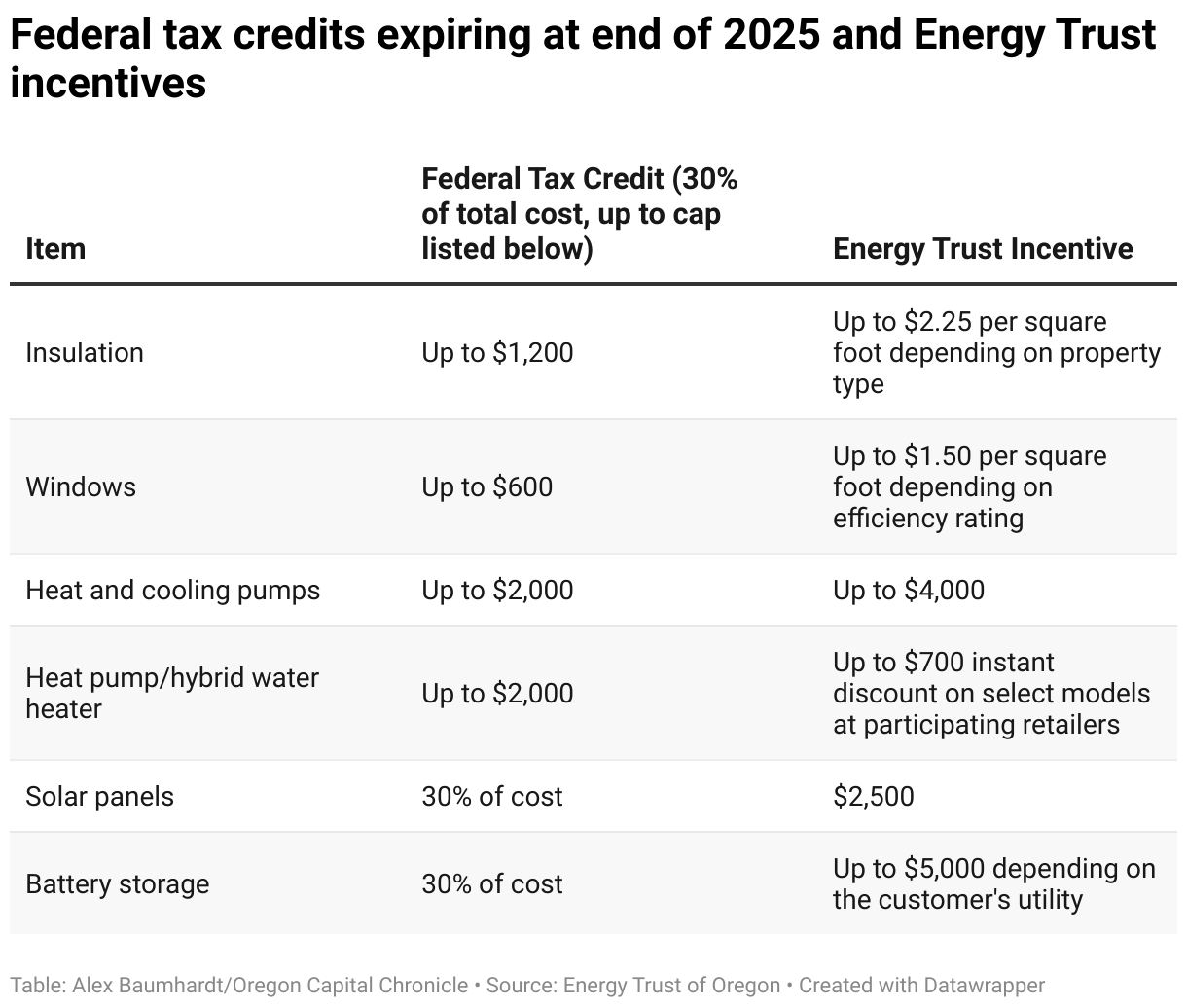
Oregon’s Missing Persons
Many times you’ll see postings without case numbers or police contact. There is rarely a nefarious reason why (the nefarious ones are pretty obvious). Usually the loved one tried to call to report their missing person and they are either refused or told to wait a day or two by people who are unaware of SB 351 and the laws that they are bound to when answering the phone. Many people don’t bother calling LE if their loved one is homeless or in transition because they believe LE won’t care. The biggest myth is the 24 hour rule.

In Oregon we don’t have those rules and an officer or person answering the phone is not allowed to decide. The law decides. We have Senate Bill 351 and it states that the police CANNOT refuse a request for any reason and they must begin working on it within 12 hours. The person making the report does not have to be related to missing person either. Here is SB 351 written by families of the missing here in Oregon in conjunction with Oregon law enforcement officers. This should be common knowledge, please make it this way. https://olis.oregonlegislature.gov/…/SB351/Introduced

 Oregon State Police are reminding parents and students of the SafeOregon hotline. It takes reports of potential threats against students and schools. The tips can be made anonymously. They can include safety threats, fights, drugs, weapons on campus, cyberbullying and students considering self-harm or suicide. A technician reviews the reports and assigns them either to police or school administrators. Tips can be made by phone, text, email or on the website https://www.safeoregon.com
  Call us at 5 41-363-7503 Or email us at Info@RogueValleyMagazine.com